The United Kingdom remains one of the most attractive destinations for overseas investors seeking safe, long-term opportunities. From London’s iconic skyline to the booming regional cities of Manchester, Birmingham, and Liverpool, the UK property market offers stability, strong returns, and global demand.
If you are a foreign cash buyer wondering how to invest in UK property, this guide will walk you through the eligibility rules, legal requirements, tax considerations, and common mistakes to avoid — step by step.
Foreigners can legally buy property in the UK without restriction. Unlike some countries, the UK imposes no ban on overseas investors. However, the process differs for cash buyers compared with those relying on mortgages.
Cash Buyers (Preferred Route): Transactions are faster, more secure, and involve fewer checks. This route avoids complications with UK lenders, who often require credit histories, local bank accounts, and higher deposits.
Mortgage Buyers: While possible, overseas buyers face stricter eligibility, limited lenders, higher interest rates, and longer approval times. For this reason, cash buyers dominate the foreign investment market.
Key Takeaways
Cash buyers enjoy speed and certainty in UK property purchases.
Mortgages are possible but less practical for overseas investors.
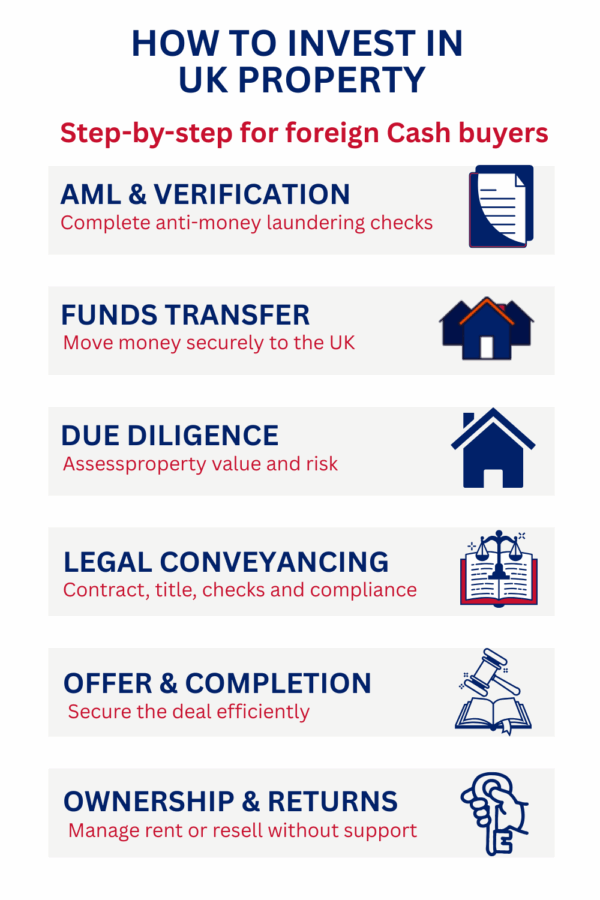
Buying property overseas can seem complex, but by breaking it down, the process becomes manageable. Here is a six-step journey for foreign cash buyers:
1. Anti-Money Laundering (AML) & Verification
UK law requires strict AML checks. Investors must provide proof of identity, address, and source of funds.
External reference: UK Government AML Guidance
2. Transferring Funds Securely
Funds should be sent to the UK through regulated banking channels. Some investors choose specialist FX brokers to minimise transfer costs.
3. Due Diligence & Property Checks
Before committing, review property ownership, tenancy status, market value, and rental yield. Professional surveys are strongly recommended.
External reference: HM Land Registry.
4. Legal Conveyancing
Hire a UK-based solicitor to handle title checks, contracts, and legal compliance. A strong conveyancer ensures smooth transfer of ownership.
5. Offer & Completion
Once due diligence is complete, buyers exchange contracts and transfer funds. Completion can happen in as little as 30 days for cash buyers.
6. Post-Purchase Ownership & Returns
Decide whether to rent, hold for capital appreciation, or diversify into a portfolio strategy. IIUKP provides ongoing support for property management and resale.
Key Takeaways
The process includes AML checks, fund transfer, due diligence, conveyancing, completion, and ownership.
Working with professionals reduces risks and speeds up transactions.
Investing in UK property as a foreign cash buyer is straightforward if you follow the right process. By understanding eligibility, taxes, and due diligence, you can secure profitable opportunities with confidence.
Actionable Steps:
Complete AML verification and prepare your proof of funds.
Engage a solicitor and transfer funds securely.
Perform due diligence and confirm rental yields.
Plan your tax and ownership structure early.
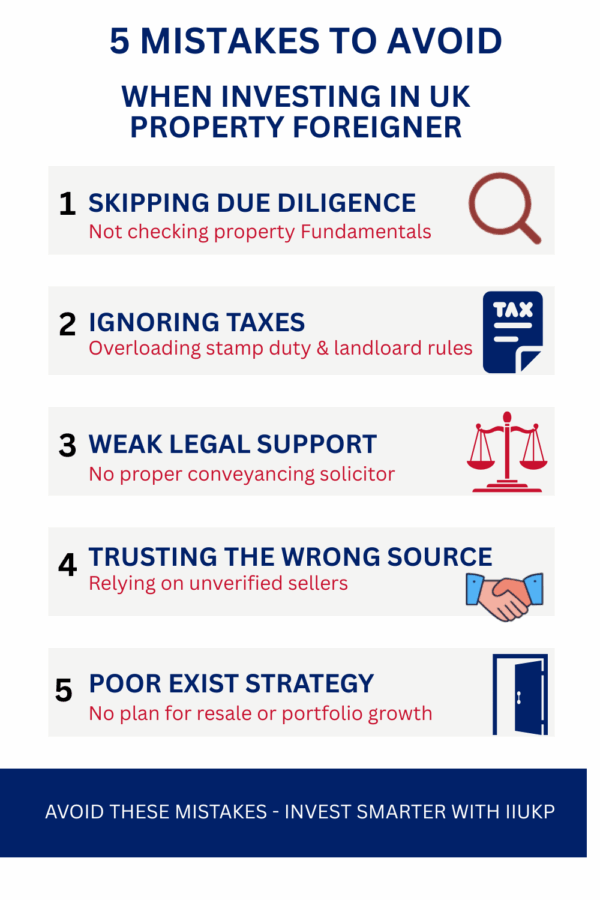
Avoid common mistakes by working with trusted experts.